Journal

Notes from the road.

Takayama — Where Time Moves Differently
Takayama — Where Time Moves Differently

Wooden houses, sake breweries and quiet streets in the heart of the Japanese Alps.


There are places in Japan where the past survives behind museum doors. And then there are places like Takayama, where history is still part of the streets you walk through.

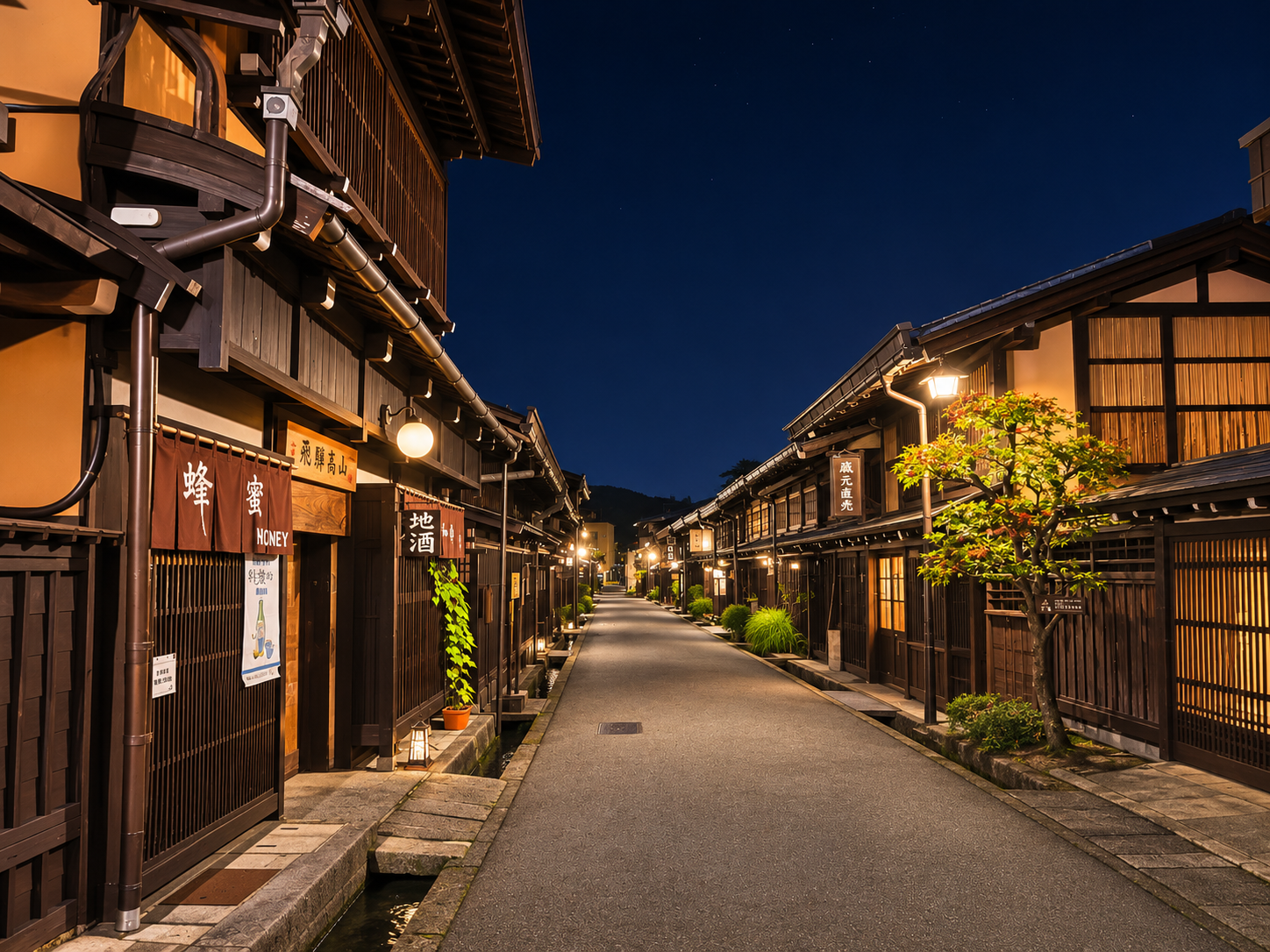
Nestled in the mountains of the Hida region, Takayama is best known for its beautifully preserved old town, where traditional wooden merchant houses line narrow streets, their dark timber façades creating an atmosphere that seems to belong to another century.

The historic Sanmachi Suji district is the heart of this experience.

Behind wooden lattice windows, small shops sell local crafts, traditional sweets and regional specialities. Narrow water channels run alongside the streets, while old sake breweries preserve one of the region's most celebrated traditions.

Look for the large cedar balls, known as sugidama, hanging outside some of the breweries. Traditionally, they announce the arrival of freshly brewed sake, gradually turning brown as the season progresses.

But Takayama is not simply a collection of beautiful old buildings.

What makes it memorable is the rhythm of everyday life.

When the Streets Fall Silent

As evening approaches, something unexpected happens.

The shops close, the daytime visitors disappear, and the historic centre becomes remarkably quiet.

Unlike Tokyo or Kyoto, where restaurants and illuminated streets can remain lively well into the night, Takayama's old town seems to retreat into itself.

Many shops and breweries close in the late afternoon, and even finding a place for dinner can require a little planning.

Yet this quietness is part of its charm.

Walking through the narrow streets after dark, with the wooden façades softly illuminated and almost nobody around, feels like stepping into a different time.

There are no crowds, no distractions, just the sound of your footsteps and the occasional light glowing behind a traditional window.

It is a side of Takayama that daytime visitors rarely experience.

A Slow Morning in the Mountains

The following morning, the city awakens gradually.

In a quiet square, you might come across someone practising tai chi, moving slowly through the early morning air.

Along the Miyagawa River, the morning market begins to come alive. Small stalls offer local produce, handmade objects, snacks and regional specialities.

But the historic shopping streets are still largely asleep.

Many shops do not open until later in the morning, creating an interesting contrast between the early activity of the market and the peaceful atmosphere of the old town.

There is no reason to rush.

A walk along the river, a visit to the market and a quiet breakfast can be the perfect way to begin the day before the shops and sake breweries welcome their first visitors.

The Art of Planning Your Time

Takayama's slower rhythm is beautiful, but it can also surprise travellers who arrive without considering local opening hours.

Reaching Takayama from Tokyo generally requires around four and a half to five hours by train, usually travelling via Nagoya.

This means that a considerable part of the day can disappear in transit.

If you have only one night in Takayama, it is worth planning your arrival carefully.

Explore the historic centre, visit the sake breweries and enjoy the local shops while they are still open. Then, if you are staying in a traditional ryokan, dedicate the evening to a relaxing onsen bath and dinner.

The next morning, enjoy the market along the river before continuing your journey.

If your itinerary allows it, however, two nights offer a more relaxed experience.

You can explore the old town without watching the clock, discover its quieter corners and appreciate the different atmosphere of the city throughout the day.

Because Takayama is not a place that reveals everything at once.

It is a place to experience slowly.

And sometimes, the most memorable moment is simply walking through an empty street, surrounded by centuries-old wooden houses, while the rest of the world seems very far away.

The Understory — Beyond the obvious.


Practical Notes

Location: Takayama, Gifu Prefecture, Japanese Alps.

Getting there: From Tokyo, travel by Shinkansen to Nagoya and continue on the JR Hida Limited Express to Takayama. Allow approximately 4.5–5 hours, depending on connections.

Historic district: Sanmachi Suji, known for traditional merchant houses, craft shops and sake breweries.

Typical shop hours: Many shops open around 9:00–10:00 AM and close between 4:00 and 5:00 PM. Individual schedules vary.

Morning market: The Miyagawa Morning Market usually starts around 7:00 AM in warmer months and 8:00 AM in winter, continuing until around noon.

Sake breweries: Look for the traditional sugidama hanging outside. Opening hours and tasting opportunities vary.

Evenings: The old town becomes very quiet. Plan dinner ahead, especially if your ryokan does not include meals.

Recommended stay: One night is possible with careful planning; two nights allow a more leisurely exploration.

Worth knowing: If you have only one afternoon, prioritize the historic streets and breweries before they close. Save the ryokan onsen for the evening.
Itsukushima — A Shrine Between Two Tides

Itsukushima — A Shrine Between Two Tides

On the island of Miyajima, the sea transforms a sacred place into two entirely different landscapes.


Some places reveal their beauty slowly. Others change before your eyes.

On the island of Miyajima, not far from Hiroshima, Itsukushima Shrine seems to exist somewhere between land and sea.

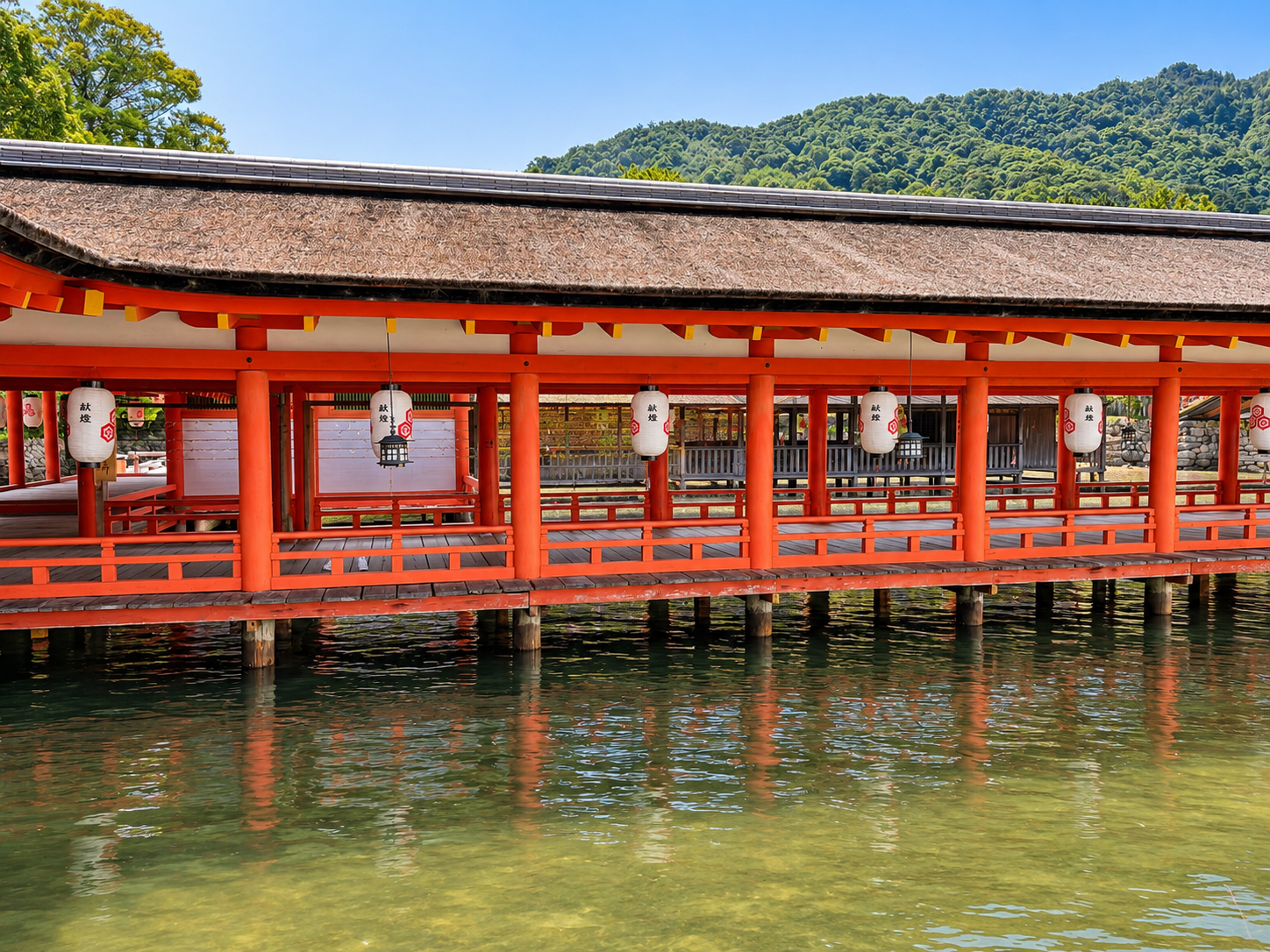
Its vermilion corridors stretch across the shallow waters of a sheltered bay, while a magnificent red torii gate rises from the sea just beyond the shrine.

At high tide, the buildings appear to float above the water, their reflections moving gently beneath the wooden walkways. The boundary between architecture and nature almost disappears.

But return a few hours later, and the scene may be completely different.

When the Sea Withdraws

As the tide recedes, the water gradually reveals the seabed beneath the shrine.

The elegant corridors that seemed suspended over the sea now stand above exposed sand and mud. The great torii, previously surrounded by water, becomes accessible on foot when the tide is sufficiently low.

Visitors can approach its enormous wooden pillars, discovering details that are almost impossible to appreciate from a distance.

It is a remarkable transformation.

The shrine itself has not moved, yet the entire landscape seems to have changed.

And this is precisely what makes Itsukushima so fascinating.

A Sacred Relationship with Nature

The shrine's unusual architecture is not simply an aesthetic choice.

For centuries, Miyajima has been regarded as a sacred island, and Itsukushima Shrine was developed in close relationship with the surrounding sea.

The present arrangement of its celebrated overwater buildings dates largely to the twelfth century, when the powerful Taira no Kiyomori supported its expansion.

The vermilion structures, the mountains rising behind them and the changing waters of the bay form a landscape in which nature is an essential part of the architecture.

The famous torii marks the symbolic entrance to this sacred space, standing offshore rather than at the beginning of an ordinary path.

Even the sea seems to participate in the experience.

Two Visits, Two Different Memories

Many travellers arrive in Miyajima hoping to photograph the famous floating torii.

But the most rewarding experience is to discover the island at different moments of the day.

At high tide, Itsukushima feels almost ethereal. The water reflects the red corridors, creating an atmosphere of calm and extraordinary beauty.

At low tide, the experience becomes more tangible. You can walk towards the torii, observe its immense scale and appreciate the relationship between the shrine and the seabed.

Neither moment is necessarily better than the other.

They simply tell different stories.

And perhaps that is the real beauty of Itsukushima: it reminds us that a place is never entirely the same, even when we stand in exactly the same spot.

Sometimes, all we need to discover something new is to wait for the tide to change.

The Understory — Beyond the obvious.


Practical Notes

Location: Miyajima Island, Hiroshima Prefecture, Japan.

Getting there: Ferries connect Miyajimaguchi on the mainland with Miyajima and the JR ferry is included in the Japan rail pass.

Best time to visit: Plan around the tides rather than a fixed time of day.

High tide: The shrine appears to float above the sea, especially when the water level is sufficiently high.

Low tide: When the water recedes enough, visitors can walk across the exposed seabed towards the great torii.

Worth knowing: The timing and height of the tides vary daily. Check a local tide table before visiting, and allow several hours if you want to experience both landscapes.

The Buddha's Nostril

The Buddha's Nostril

A Small Passage to Enlightenment at Nara's Tōdai-ji Temple


Sometimes, the most fascinating stories are hidden in the smallest details.

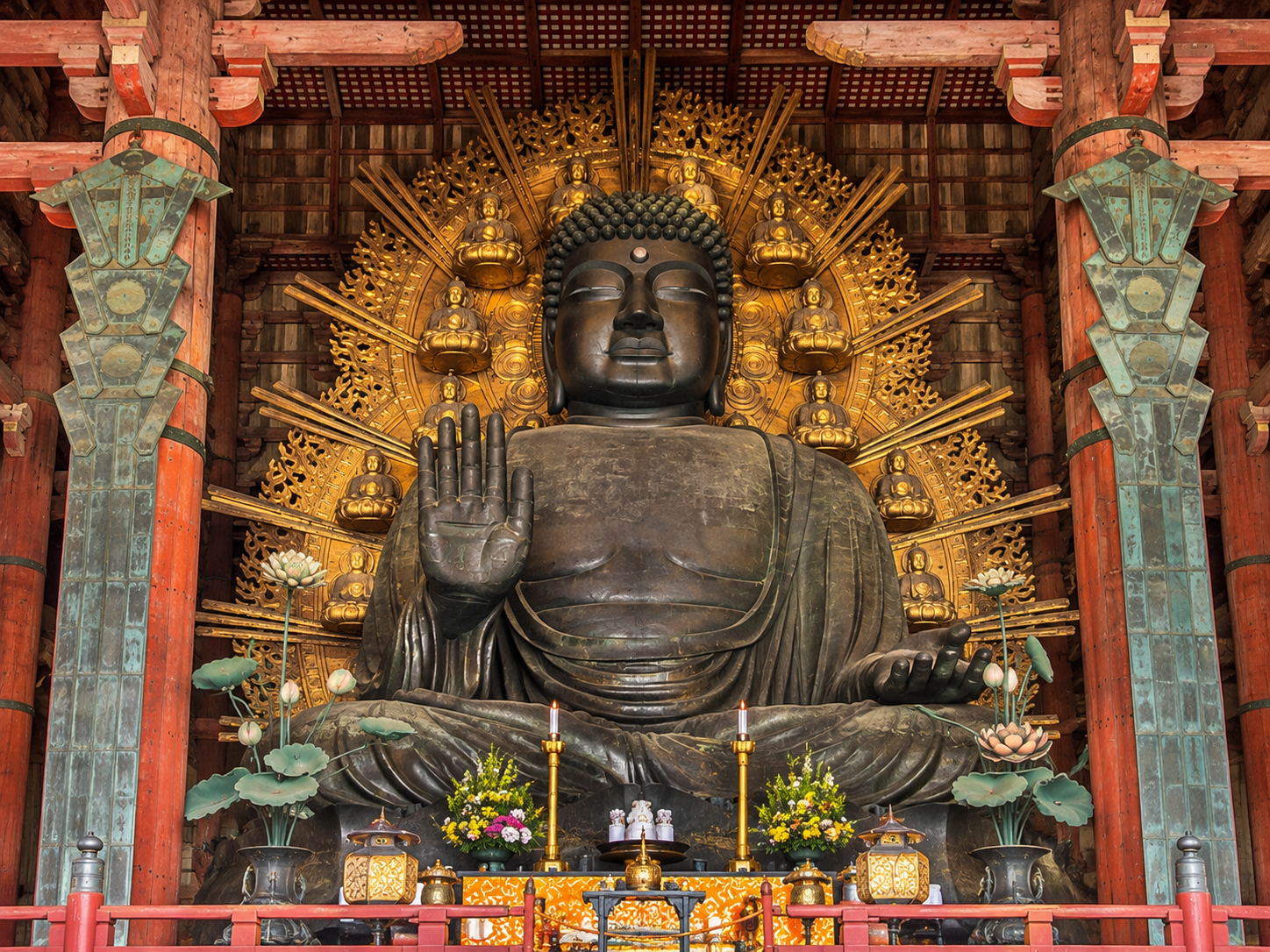
In the ancient city of Nara, the magnificent Tōdai-ji Temple is home to one of Japan's most impressive Buddhist statues: the Great Buddha, or Daibutsu.

Seated inside the enormous wooden Great Buddha Hall, the bronze figure rises approximately fifteen metres above visitors, its peaceful expression and raised hand creating an atmosphere of extraordinary serenity.

It is a place where everything seems designed to remind us of how small we are.

And yet, one of the temple's most curious traditions has nothing to do with the immense statue itself.

A Hole the Size of Buddha's Nostril

Near the back of the Great Buddha Hall stands a massive wooden pillar with a surprisingly small rectangular opening carved through its base.

According to local tradition, the opening is said to be the same size as one of the Great Buddha's nostrils.

But its significance goes beyond this unusual comparison.

It is believed that anyone who manages to crawl through the opening may be granted enlightenment in their next life.

The contrast is almost amusing: surrounded by monumental Buddhist architecture and centuries of religious history, visitors suddenly find themselves kneeling on the wooden floor, trying to squeeze through a hole in a pillar.

Children usually approach the challenge with enthusiasm, slipping through with relative ease. Adults, on the other hand, often discover that the journey towards enlightenment requires a little more flexibility than expected.

There are smiles, encouragement and occasionally a moment of hesitation.

But behind this playful ritual lies a fascinating idea.

A Different Kind of Discovery

In Buddhism, enlightenment is a profound spiritual awakening, traditionally associated with wisdom, compassion and freedom from ignorance.

The pillar's opening should not be understood as a literal shortcut to such a complex spiritual achievement. Rather, it is a popular tradition that has become part of the experience of visiting Tōdai-ji.

And perhaps that is what makes it so memorable.

A place of extraordinary religious importance also offers a small, almost playful moment in which visitors can participate in a tradition passed down through generations.

It is a reminder that culture is not found only in monuments, ceremonies or ancient texts.

Sometimes, it survives in simple gestures, curious beliefs and stories that people continue to share.

So, when visiting the Great Buddha of Nara, take a moment to admire the immense bronze statue.

Then look for the wooden pillar near the back of the hall.

You may discover that one of the smallest openings in the temple holds one of its most memorable stories.

And who knows?

Perhaps enlightenment is just a little closer than you think.

The Understory — Beyond the obvious.


Practical Notes

Location: Tōdai-ji Temple, Nara, Japan.

Where to find it: Inside the Great Buddha Hall (Daibutsuden), towards the rear of the building.

What to look for: A rectangular opening at the base of one of the enormous wooden pillars.

The tradition: Passing through the opening is popularly associated with attaining enlightenment in the next life.

Worth knowing: The opening is narrow and easier for children than adults. Access to the pillar may occasionally be restricted, so check whether the activity is permitted during your visit.


Yunessun — When Japan Reinvents the Onsen

Yunessun — When Japan Reinvents the Onsen

Coffee, wine and hot springs: a playful side of Japan's bathing culture.


Japan has a long tradition of bathing. From secluded mountain onsen to beautifully designed ryokan baths, hot springs are deeply connected to the country's culture, offering moments of silence, relaxation and a connection with nature.

But Japan also has a remarkable ability to reinvent its traditions.

And sometimes, the result is wonderfully unexpected.

Hidden among the mountains of Hakone, Yunessun is a place where the traditional concept of an onsen takes a rather unusual turn.

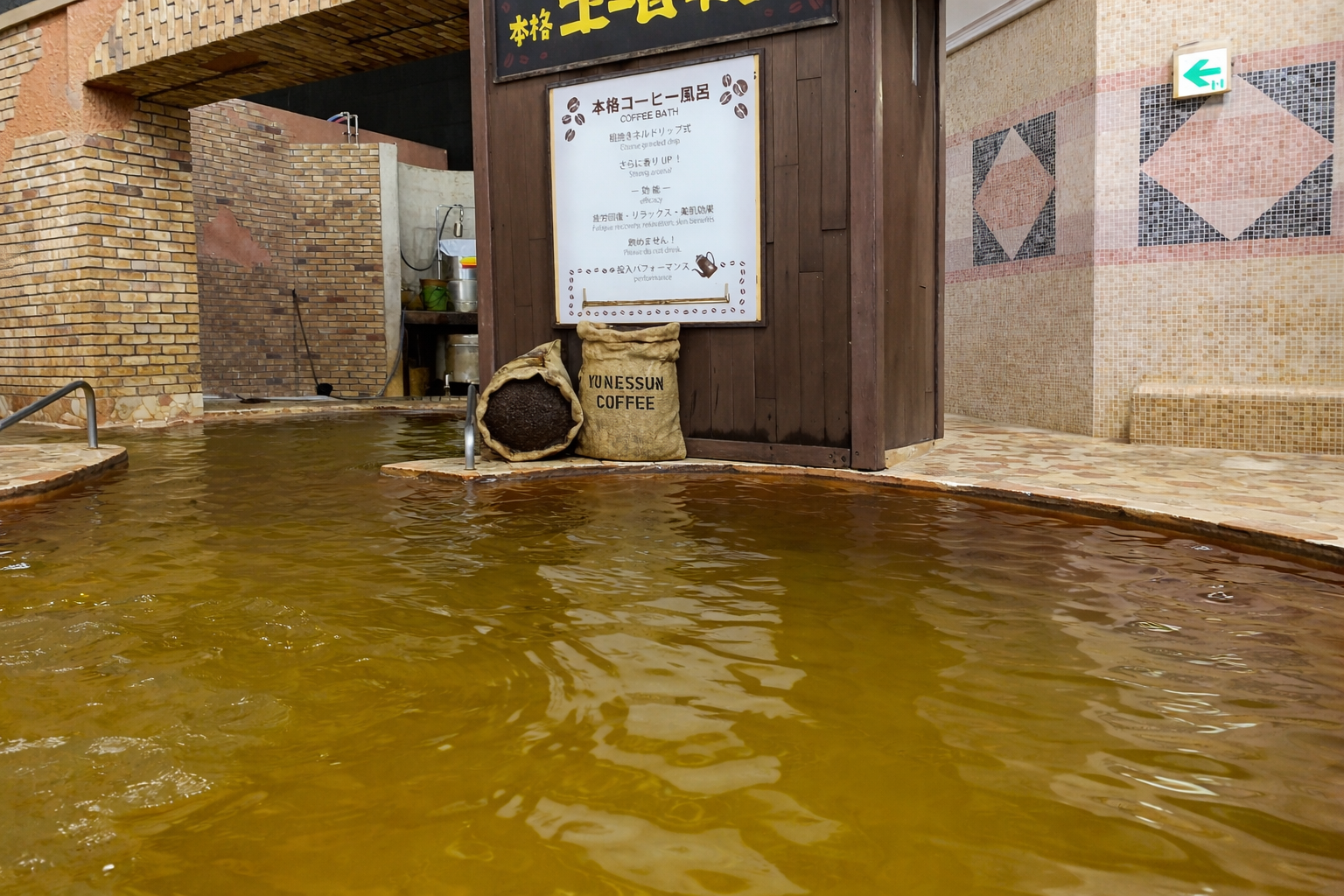
Imagine stepping into a warm pool surrounded by the unmistakable aroma of freshly brewed coffee. Or soaking in a red-coloured bath inspired by wine, with a giant wine bottle towering above the water.

It may sound like something invented for a Japanese television show, but at Yunessun, these experiences are part of everyday life.

The coffee bath is perhaps one of the most curious attractions. The dark, warm water, the coffee-themed decorations and the familiar aroma create a surreal atmosphere. It is difficult not to smile at the thought of taking a bath in something you would normally drink at breakfast.

But the experience goes beyond these unusual pools.

There are water slides, indoor and outdoor bathing areas, and spaces designed for families and friends to enjoy together. Unlike traditional Japanese onsen, where bathing is usually done without clothing and facilities are separated by gender, Yunessun's playful bathing area welcomes visitors wearing swimsuits.

For those looking for a more traditional experience, the neighbouring Mori no Yu offers a quieter atmosphere, with Japanese-style baths surrounded by Hakone's natural scenery.

Two very different interpretations of the same bathing culture, existing side by side.

Yunessun may not be the place to discover the silence and contemplation of a traditional onsen. Instead, it reveals something equally fascinating about Japan: its willingness to approach familiar traditions with creativity, humour and a sense of play.

Because travelling is not only about discovering ancient temples, beautiful landscapes or historic traditions.

Sometimes, it is also about finding yourself sitting in a pool of warm coffee, wondering how anyone came up with the idea in the first place.

And enjoying every minute of it.

The Understory — Beyond the obvious.


Practical Notes

Location: Hakone Kowakien Yunessun, Ninotaira, Hakone, Kanagawa Prefecture.

What to expect: A hot spring theme park with unusual bathing experiences, including coffee and wine baths, water attractions and traditional onsen facilities.

What to bring: Swimwear for the Yunessun area. Towels and swimsuits can also be rented.

Best for: Families, couples and travellers looking for an unusual Japanese experience.

Worth knowing: Yunessun and Mori no Yu are separate areas, with different bathing rules and ticket options. Check current prices and opening hours before visiting.

Official website: https://www.yunessun.com/?stt_lang=en


Tonki Tonkatsu — A Taste of Everyday Tokyo

Tonki Tonkatsu — A Taste of Everyday Tokyo

A traditional restaurant where simplicity, patience and hospitality tell a story of their own.


Some places don't need to impress you. They simply invite you into their world.

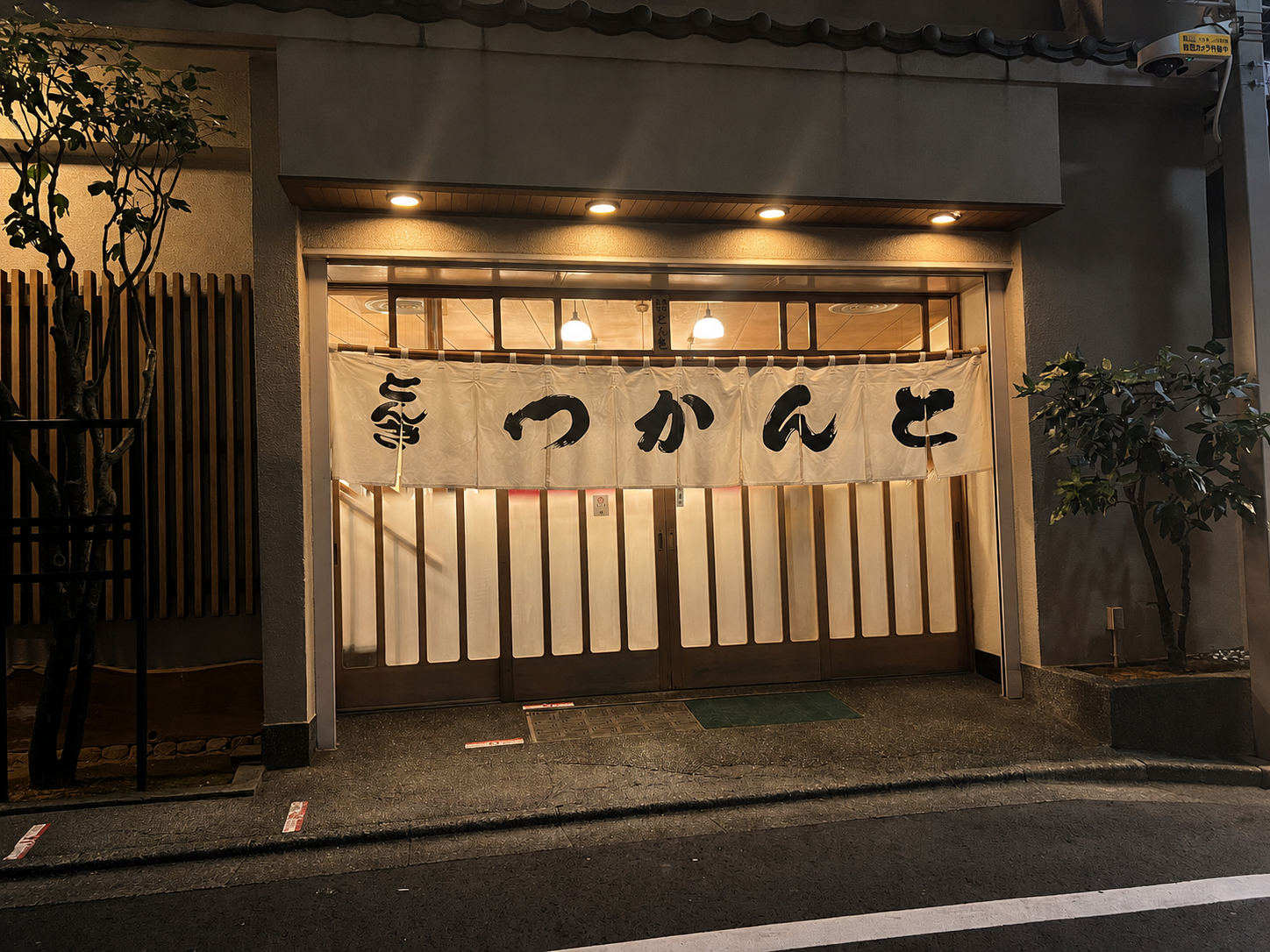
From the street, Tonki looks like countless other traditional Japanese restaurants. A modest entrance, warm lights glowing behind white noren curtains, and a quiet sense that whatever happens inside has been happening in much the same way for years.

Step through the door, and you immediately understand that this is no ordinary dining experience.

A large counter dominates the ground floor. Behind it, the kitchen is constantly in motion. Deep pots of bubbling oil stand ready for the next batch of tonkatsu, while the cooks move with the quiet precision of people who have repeated the same gestures thousands of times.

Some guests take their seats at the counter, watching the preparation of their meal. Others, like us, make their way to the staircase leading to the upper floor, where a line of customers patiently waits for a table.

There is no elaborate menu to study. Just two choices of tonkatsu, prepared using different cuts of pork.

The meal is equally straightforward: a golden, crispy pork cutlet accompanied by finely shredded raw cabbage, a bowl of steamed rice and miso soup.

Nothing unnecessary. Nothing complicated.

And yet, there is something deeply satisfying about a restaurant that knows exactly what it wants to serve.

The ordering process is part of the experience. You choose your meal before being shown to your table, and when your turn finally comes, everything unfolds with remarkable efficiency.

English is not part of the everyday conversation here. But that hardly matters.

The staff greet guests with genuine smiles, patiently helping those who struggle with the language. A gesture, a nod, a few words exchanged without really understanding one another — somehow, everything works.

Perhaps this is what makes places like Tonki so memorable.

Not the complexity of the food, nor the elegance of the surroundings, but the feeling of briefly becoming part of an ordinary Japanese evening.

A restaurant doing what it has always done, welcoming people around a simple meal.

And sometimes, that is exactly the experience we travel for.

The Understory — Beyond the obvious.